aa.png)
Feeling nervous before an interview doesn't mean you're unprepared. The useful goal is to lower the noise enough to think, listen, and answer clearly. Start by removing preventable uncertainty, then use one short physical reset before the call or meeting, and keep a few recovery lines ready in case your mind goes blank.
This plan starts the night before and carries you through the interview itself. You don't need to feel perfectly calm. You need a routine that still works while your heart is beating faster than usual.
Why do interview nerves feel so intense?
An interview combines uncertainty, evaluation, and a result you care about. Your body may respond with a quicker heartbeat, shallow breathing, sweaty hands, a shaky voice, or thoughts that race ahead of the question. Then a second worry appears: "What if they notice I'm nervous?" That extra layer often causes more trouble than the original nerves.
Treat the physical reaction as information, not a verdict on your ability. You can be nervous and still give a strong answer. Interviewers also expect candidates to pause, ask for clarification, and think. A calm performance is less about hiding every sign of stress and more about staying connected to the conversation.
Preparation helps most when it reduces uncertainty. Memorizing dozens of polished answers can have the opposite effect because you're trying to retrieve the right script while listening. A smaller set of flexible examples works better. If you're preparing behavioral stories, this guide to behavioral interview questions and answers shows how to adapt evidence without sounding rehearsed.
What should you do the night before the interview?
Use the evening to close open loops, not to squeeze in another three hours of studying. Confirm the time, location or meeting link, interviewer names, expected format, and anything you need to bring. For an in-person meeting, check the route and choose a realistic arrival point nearby. For a remote interview, test the microphone, camera, power cable, and internet connection from the room you'll actually use.
Then prepare one small reference sheet. Keep it to the role's three priorities, two or three examples you want to use, and three questions for the interviewer. The sheet is a prompt, not a script. Reading full answers tends to flatten your voice and makes a follow-up question harder to handle.
Finish active preparation at a set time. Choose your clothes, put water nearby, charge your devices, and decide what breakfast or lunch will be. These ordinary decisions matter because each one you settle now is one less decision competing for attention tomorrow.
If your mind keeps rehearsing disaster scenarios, write each practical worry beside one response. "What if the video call fails?" becomes "I have the recruiter's email and can rejoin from the saved link." "What if I forget an example?" becomes "I can ask for a moment and choose from my three-story bank." The point isn't to guarantee a smooth day. It's to prove that a small problem doesn't have to ruin the whole conversation.
How can you calm down in the final ten minutes?
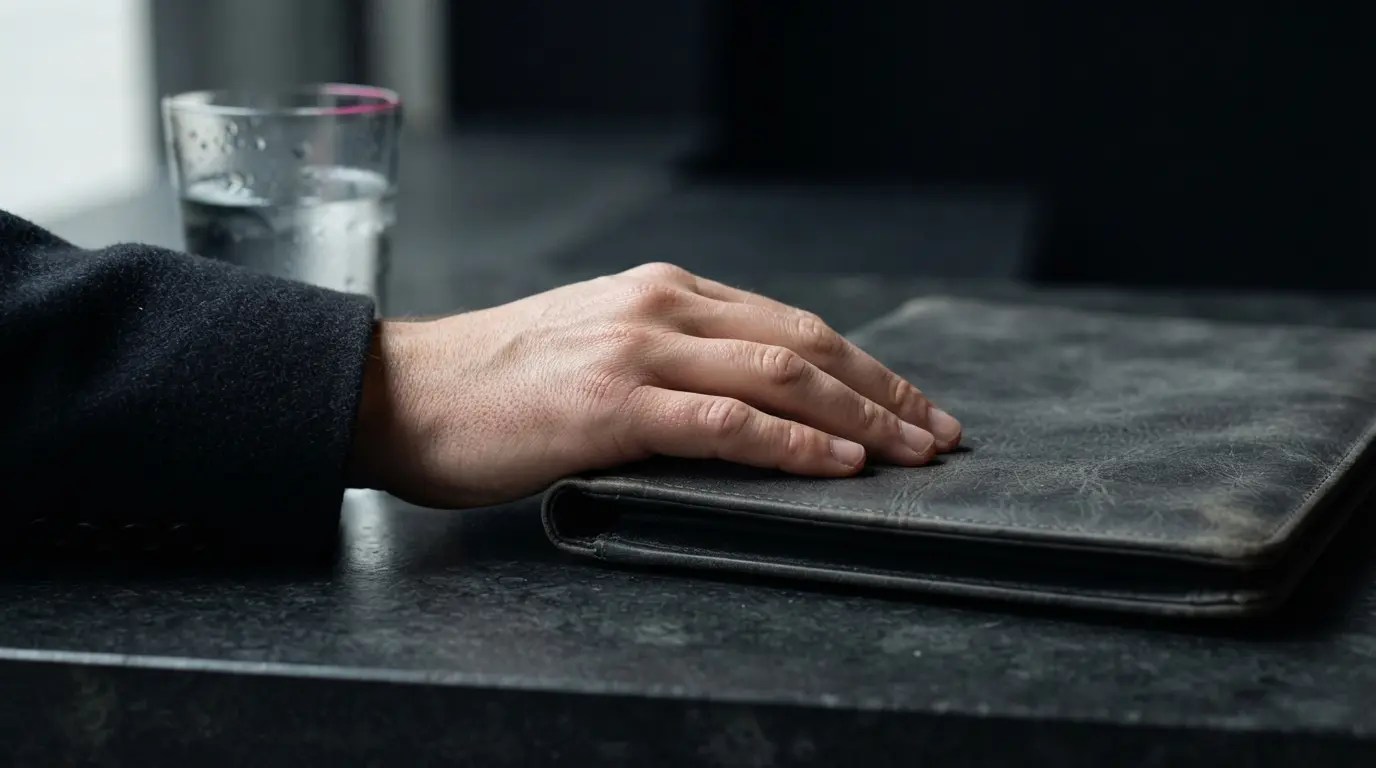
Stop reviewing new material. Your job in the final ten minutes is to shift from studying to listening. Put both feet on the floor or stand somewhere stable, loosen your jaw and shoulders, and breathe at a pace that feels comfortable. A slightly longer exhale can help you stop taking quick, shallow breaths, but don't turn breathing into another test you can fail.
Use this short sequence:
- Check the one thing that could prevent the interview from starting, such as the room number, meeting link, microphone, or phone signal.
- Read the role's three priorities and your three evidence prompts once.
- Take several unforced breaths and let your exhale run a little longer than your inhale.
- Say your opening introduction aloud at a normal conversational pace.
- Put the notes down and focus on the first question rather than the final outcome.
For an in-person interview, arriving in the area early gives you a buffer, but entering the office far too early can create a long, awkward wait. Use the extra time nearby and check in at the time the recruiter requested. For a remote call, join early enough to handle an update or permission prompt without sitting on camera for twenty minutes. The practical setup in these Zoom interview etiquette tips can help you avoid last-minute camera and audio stress.
If a live support tool is part of your setup, test it before the real meeting and keep a manual backup. Hiintly offers a free 10-minute session that becomes available again after a 5-minute cooldown, so you can check the flow without treating the interview itself as the first test. Any tool should reduce cognitive load, not give you one more window to manage.
What should you say when your mind goes blank?
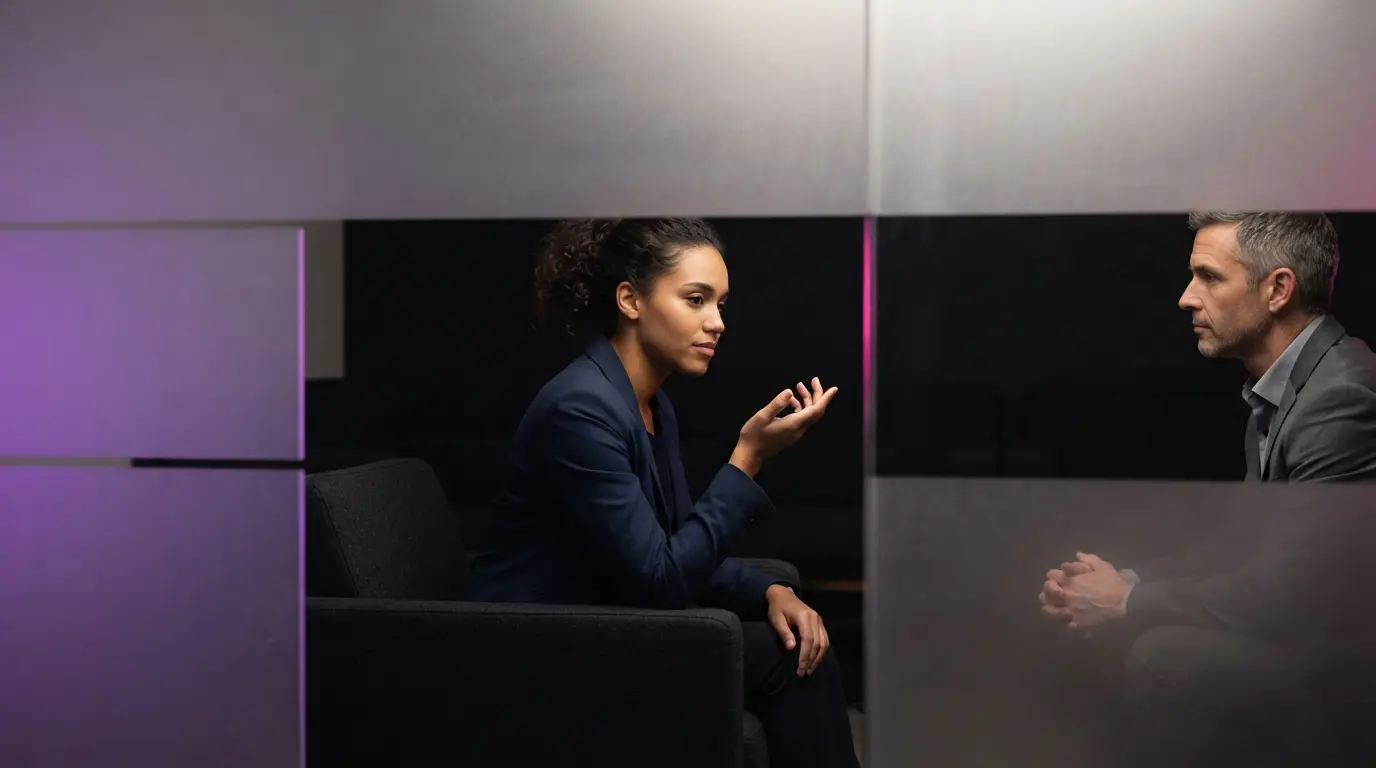
A blank moment feels much longer to you than it does to the interviewer. Resist the urge to fill it with rushed words. Pause, breathe once, and create a little structure. Most interviewers would rather wait a few seconds for a relevant answer than listen to a fast answer that never reaches the point.
Choose a recovery line that matches the situation:
- "That's a good question. Let me take a moment to choose the most relevant example."
- "Could you repeat the last part of the question? I want to make sure I answer the right thing."
- "I started too broadly. Let me restart with the specific situation."
- "I haven't handled that exact case, but I can explain how I'd approach it."
- "Would it be helpful if I used an example from my last project?"
These lines work because they tell the interviewer what you're doing. You aren't apologizing for thinking. You're showing that you can slow down, clarify the task, and recover cleanly.
After the pause, use a simple path: state the situation, name the decision or action you owned, give the relevant detail, and finish with the result or lesson. Don't restart the entire story because one sentence came out badly. Correct the point and continue. A small, calm repair often makes you sound more credible than a perfectly memorized answer.
How do you stay steady during a difficult question?
Listen through the end of the question before planning the answer. When nerves are high, candidates often grab the first familiar phrase and miss a condition in the second half. Repeating or paraphrasing the question is useful when it's genuinely complex: "So you'd like an example where I disagreed with a teammate and changed the outcome, right?"
Give yourself a target for the first sentence. For a behavioral question, name the example and your role. For a technical question, clarify the assumptions and describe the first approach you'd evaluate. For an opinion question, state your view and the trade-off that shaped it. Once the opening has direction, the rest is easier to organize.
If you notice yourself speeding up, finish the current sentence and pause. Take a sip of water if one is available. You don't need to announce that you're nervous unless you want to. If you do mention it, keep it brief and move forward: "I'm excited about the role, so I may take an extra second to think." A long apology asks the interviewer to manage your anxiety for you.
Remember that you're evaluating the job as well. Ask follow-up questions, notice how the interviewer explains the work, and pay attention to whether expectations are clear. Moving from "I am being judged" to "we are checking the fit" gives your attention somewhere more useful to go.
What changes for a video interview?
Remote interviews add a second source of pressure because you are managing the conversation and the equipment. Simplify what you can. Close unrelated apps, silence notifications, plug in your device, and keep the meeting link plus the recruiter's contact details accessible. If bandwidth is unreliable, know how to turn off incoming video or switch to a phone call if the interviewer agrees.
Look at the camera when making an important point, but don't force constant camera contact. Looking at the interviewer's face while listening is normal. A small preview window near the camera can help, although hiding self-view is often better if watching your own expression makes you more self-conscious.
Prepare one technical-recovery sentence: "It looks like the audio dropped for a moment. I heard you up to the question about the deadline. Could you repeat the last sentence?" That is clearer than pretending you heard everything. If the call disconnects, rejoin once, then use the contact method the recruiter provided. A short interruption is manageable when your response is calm and specific.
How can you practice without making yourself more nervous?
Do one short rehearsal that includes recovery, not just ideal answers. Set a five-minute timer and answer an opening question, one behavioral question, and one role-specific question aloud. On purpose, stop halfway through one answer, use a recovery line, and restart. This trains the exact skill you need when a real answer goes off course.
Review only three things: whether you answered the question, whether the example had enough detail, and whether the ending was clear. Don't score your voice, face, posture, word choice, and every filler word at once. That kind of monitoring makes it harder to speak naturally on the next attempt.
Practice at the same time of day and in the same format when possible. If the interview is on video, rehearse on video. If it's a panel, ask two friends to take turns with follow-ups or use the preparation steps in this panel interview guide. Familiarity won't remove every nerve, but it reduces the number of surprises your attention has to handle.
When are interview nerves more than ordinary nerves?
Some nervousness around an important interview is common. Consider getting support from a licensed mental health professional if anxiety is intense, happens across many situations, causes panic symptoms, regularly stops you from attending interviews, or interferes with sleep and daily life. Career advice can help with preparation, but it isn't a substitute for mental health care.
For the interview in front of you, keep the goal modest. Remove practical uncertainty, settle your body, listen to the full question, and use a recovery line when needed. You can feel nervous and still be thoughtful, warm, and specific. That is enough to have a real conversation.
Frequently Asked Questions
- Is it okay to tell an interviewer that I am nervous?
- Yes, if saying it helps you reset. Keep it brief, connect the nerves to your interest in the role, and move back to the question instead of giving a long apology.
- What can I take before an interview to calm my nerves?
- Avoid trying unfamiliar supplements or medication right before an interview. If anxiety is persistent or severe, ask a qualified medical professional for advice that considers your health and current medications.
- How do I stop shaking during an interview?
- Plant both feet, release your grip on notes or a pen, and slow your breathing without forcing it. If the shaking continues, focus on listening and answering rather than trying to hide every physical sign.
- How early should I arrive for an interview?
- Follow the recruiter’s instructions. For an in-person meeting, arrive in the area early but check in close to the requested time. For video, open the link early enough to handle updates and permissions.
- What if my mind goes completely blank?
- Ask for a moment, repeat or clarify the question, and name the example you plan to use before adding details. A calm pause is better than rushing into an unrelated answer.
- Do interviewers reject candidates for looking nervous?
- Interviewers usually care more about whether you understand the question and give relevant evidence. Nerves may affect delivery, but a pause or shaky start does not automatically erase a strong answer.