
Situational interview questions ask what you would do in a realistic work scenario. A strong answer makes your judgment visible: clarify the goal, name the risk, explain your actions in order, and show how you would check that the solution worked. You do not need a perfect story or a memorized speech.
This guide gives you a repeatable answer method and 12 sample responses you can adapt to your own role. Read the examples for their reasoning, then replace the details with choices you could honestly defend in a follow-up.
What are situational interview questions really testing?
A situational question gives you a hypothetical problem and asks how you would respond. You might hear, "What would you do if two important deadlines collided?" or "How would you handle a customer who rejected your proposed solution?" The interviewer is less interested in a magic phrase than in how you sort a messy problem.
Most questions test several things at once. Can you identify the real goal? Do you gather enough information before acting? Can you balance speed, quality, and relationships? Will you communicate early, take responsibility, and involve the right person when the stakes exceed your authority? Your answer should let the interviewer follow those decisions without making them guess.
This is also why a dramatic outcome is unnecessary. A calm answer about preventing a missed handoff can reveal better judgment than a heroic story about saving a failing project. Interviewers want evidence that your default behavior is sensible and repeatable.
How are situational and behavioral questions different?
Situational questions look forward: "What would you do?" Behavioral questions look backward: "Tell me about a time when you did this." The distinction matters because a hypothetical answer needs assumptions and a proposed sequence, while a past example needs accurate evidence about what actually happened.
| Question type | What it asks for | Best starting point |
|---|---|---|
| Situational | Your likely response to a hypothetical problem | Clarify the goal and explain the steps you would take |
| Behavioral | Evidence from something you have already done | Give the context, your action, and the real result |
You can still use a relevant past example inside a situational answer. Start by answering the hypothetical directly, then add one sentence such as, "I used a similar approach when a launch date moved at my last company." This shows that your plan comes from experience without dodging the question.
The STAR method can help organize either type, but do not force a fictional "result" onto a future scenario. For a situational question, describe the result you would aim for and how you would measure it. That small change makes the answer honest.
How should you structure a situational answer?

Use a five-part sequence that you can remember under pressure:
- Clarify the goal and any missing facts.
- Name the main risk or trade-off.
- Explain your first action and why it comes first.
- Describe how you would communicate, involve others, or escalate.
- Say how you would check the outcome and adjust.
That sequence gives your answer a beginning, middle, and end without turning it into a script. It also prevents two common mistakes: rushing into action before understanding the problem, and describing a pleasant intention without saying what you would actually do.
Aim for roughly 60 to 90 seconds for a first response. If the scenario is vague, ask one useful clarifying question before answering. "Is the deadline fixed because of a customer commitment, or is there room to change scope?" is useful because the answer changes your plan. Asking five minor questions can sound like avoidance, so state a reasonable assumption and move forward if the interviewer does not provide more detail.
Which situational interview questions test priorities and judgment?

1. What would you do if two urgent deadlines conflicted?
"I would first confirm the business impact, fixed commitments, and amount of work remaining for both deadlines. If one affects a customer launch and the other is an internal target, that difference shapes the priority. I would show my manager the options early, including what can be completed, delegated, or reduced in scope. Once we agree on the order, I would tell each affected person what to expect and set a short progress check. My goal would be to protect the highest-impact commitment without surprising anyone about the other one."
This works because it does not pretend that working faster solves every conflict. It makes the trade-off explicit and communicates before either deadline fails.
2. What would you do if you noticed a mistake that nobody else had seen?
"I would check the size of the impact before changing anything, then document what I found. If it could affect a customer, financial result, security decision, or dependent team's work, I would raise it immediately with the owner. I would take responsibility for my part, propose the safest correction, and explain any timing effect. After the fix, I would look at why the mistake escaped the normal check and add a practical safeguard. I would not hide a small error and hope it stayed small."
The strongest detail is the threshold for escalation. You show that you can move quickly without treating every typo like an emergency.
3. How would you handle unclear instructions from your manager?
"I would summarize the outcome I think they want, then ask about the audience, deadline, and definition of done. If they were unavailable, I would review similar work, choose the lowest-risk assumption, and send a short note explaining how I planned to proceed. I would create an early draft or checkpoint rather than completing the entire task in isolation. That gives my manager something concrete to correct while changes are still cheap."
This answer shows independence and alignment together. Saying only "I would ask my manager" can sound passive, while charging ahead without a check can waste time.
4. What would you do if a project changed close to the deadline?
"I would separate the requested change from the reason behind it. If the underlying need can be met with a smaller adjustment, I would offer that option. I would estimate the effect on time, quality, testing, and other commitments, then give the decision-maker clear choices. Once a choice is made, I would update the plan and tell everyone whose work depends on it. I would also record what changed so the team does not keep working from an older version."
Avoid claiming that you always welcome last-minute change. A credible answer recognizes the cost while staying focused on the business need.
Which questions test teamwork and conflict?
5. What would you do if a coworker strongly disagreed with your approach?
"I would ask them to explain the risk they see and the evidence behind their preferred approach. Then I would restate the shared goal, because disagreement becomes easier to solve when we are judging options against the same outcome. If possible, I would compare the options with a small test or an agreed set of criteria. If the decision still needed an owner, I would present both views fairly and support the final choice. I would not turn a technical or process disagreement into a personal contest."
That answer demonstrates listening without promising automatic agreement. It also gives the conflict a fair stopping point.
6. How would you respond if a teammate was not completing their share?
"I would speak with them privately and start with the missed work rather than an accusation about effort. I would ask whether the blocker was unclear ownership, workload, missing information, or something else. If we could solve it directly, we would agree on the next action and a check-in time. If the delivery remained at risk, I would tell the project owner early and focus on redistributing work or changing scope. I would protect the deadline, but I would not embarrass the teammate in a group meeting."
Notice that the answer does not diagnose laziness from a distance. It combines respect for the person with responsibility to the team.
7. What would you do if you received unfair criticism in a meeting?
"I would keep the meeting focused and ask for a specific example if the criticism was too broad to act on. If the issue could be resolved with a fact, I would correct it calmly. If emotions were rising or the discussion needed more context, I would suggest continuing privately after the meeting. I would review the feedback later for anything useful, then address the inaccurate part with the person rather than recruiting allies. If the behavior became a pattern, I would document it and speak with the appropriate manager."
This is stronger than promising to stay calm. It shows what calm behavior looks like and when a private disagreement should become a formal concern.
8. How would you handle a difficult customer or stakeholder?
"I would let them explain the problem without interrupting, then repeat the main concern to confirm I understood it. I would separate what I could resolve immediately from anything that required approval or investigation. I would give a specific next step and update time rather than a vague promise. If their requested solution created a legal, safety, or policy problem, I would explain the boundary and offer the closest workable option. I would follow up after the action to confirm that the original issue was addressed."
For a customer-facing role, adapt the language to your real authority. Never promise a refund, deadline, or exception you would not be allowed to grant.
Which questions test leadership and accountability?
9. What would you do if someone you managed was underperforming?
"I would use specific examples to explain the gap between current work and the expected standard. Then I would ask questions before deciding on the cause. The person may need clearer priorities, training, feedback, or a different workload. We would agree on a small number of measurable improvements, support available, and a review date. I would document the plan and give feedback during the period, not save every concern for the final meeting. If performance still did not improve, I would follow the company's process consistently."
Good leadership answers do not jump from one missed result to punishment. They also do not avoid a clear standard in the name of being supportive.
10. How would you make a decision when the team could not agree?
"I would identify whether we needed consensus, expert input, or a named decision owner. Then I would define the criteria, such as customer effect, reversibility, cost, and time. I would make sure the strongest concern from each option was heard, set a decision time, and avoid reopening the debate without new information. If the decision was mine, I would explain the reasoning and what evidence would cause us to revisit it. The team should know both the direction and the conditions for changing it."
This response shows that participation and decision rights are different. Teams can contribute fully without every choice becoming unanimous.
11. What would you do if your decision caused a poor result?
"I would stabilize any immediate impact, tell the affected people what happened, and own the decision without shifting blame. I would gather enough facts to separate a weak decision from bad luck or information that was unavailable at the time. Then I would propose the correction and share what I would change in the decision process. If another person raised the risk earlier, I would acknowledge that directly. Accountability means repairing the outcome and improving the next choice, not performing regret."
Interviewers often follow this with "What did you learn?" Be specific about the changed behavior, such as adding a pre-launch check or asking for frontline input earlier.
12. How would you lead through a sudden change?
"I would first confirm what is decided, what is still open, and why the change is happening. I would translate that into immediate priorities for the team and name anything we should pause. I would give people a place to raise risks and practical questions, then take unresolved issues back to the decision-maker. Because information changes quickly, I would set a predictable update rhythm and correct earlier guidance openly. I would keep the team moving without pretending to know details that had not been decided."
The useful balance is steadiness without false certainty. People need direction, but invented confidence creates more confusion later.
How can you adapt these answers to your role?
Keep the reasoning and change the evidence. A software engineer answering the deadline question might discuss testing, dependencies, and a safe reduction in scope. A salesperson might compare customer impact, revenue timing, and commitments already made. A product manager might explain how they would gather user evidence and define the decision owner. A new graduate can draw on coursework, volunteering, part-time work, or a group project, as long as the example is honest and the workplace judgment is clear.
For technical roles, do not disappear into implementation detail. Explain the choice in plain language first, then add the technical check that makes it safe. For management roles, show how you set expectations and make decisions without claiming that you would personally fix every task. For customer-facing roles, show empathy alongside boundaries.
If your interview has several people, use the same answer structure but make your reasoning easy for the whole room to follow. Our guide to handling a panel interview covers eye contact, answer routing, and follow-up when different interviewers care about different parts of your response.
How should you handle follow-up questions?
Follow-ups usually test whether your first answer survives pressure. The interviewer may change one fact, remove a resource, or ask why you did not choose another option. Listen for the new constraint and update only the part of your plan it affects. You are allowed to say, "With that information, I would change the order and contact the customer first."
Do not defend your original answer as if changing your mind means losing. Good judgment includes revising a plan when the facts change. If the interviewer asks about an option you rejected, explain the trade-off: "That would be faster, but I would avoid it here because it skips the required review and could create a larger customer problem."
On a phone or video screen, pauses can feel longer because you cannot read the room as easily. A short signpost such as, "I would think about that in three steps" helps the interviewer follow you. The phone screen preparation guide has practical advice for pacing and sounding clear when visual cues are limited.
How can you practice without memorizing scripts?
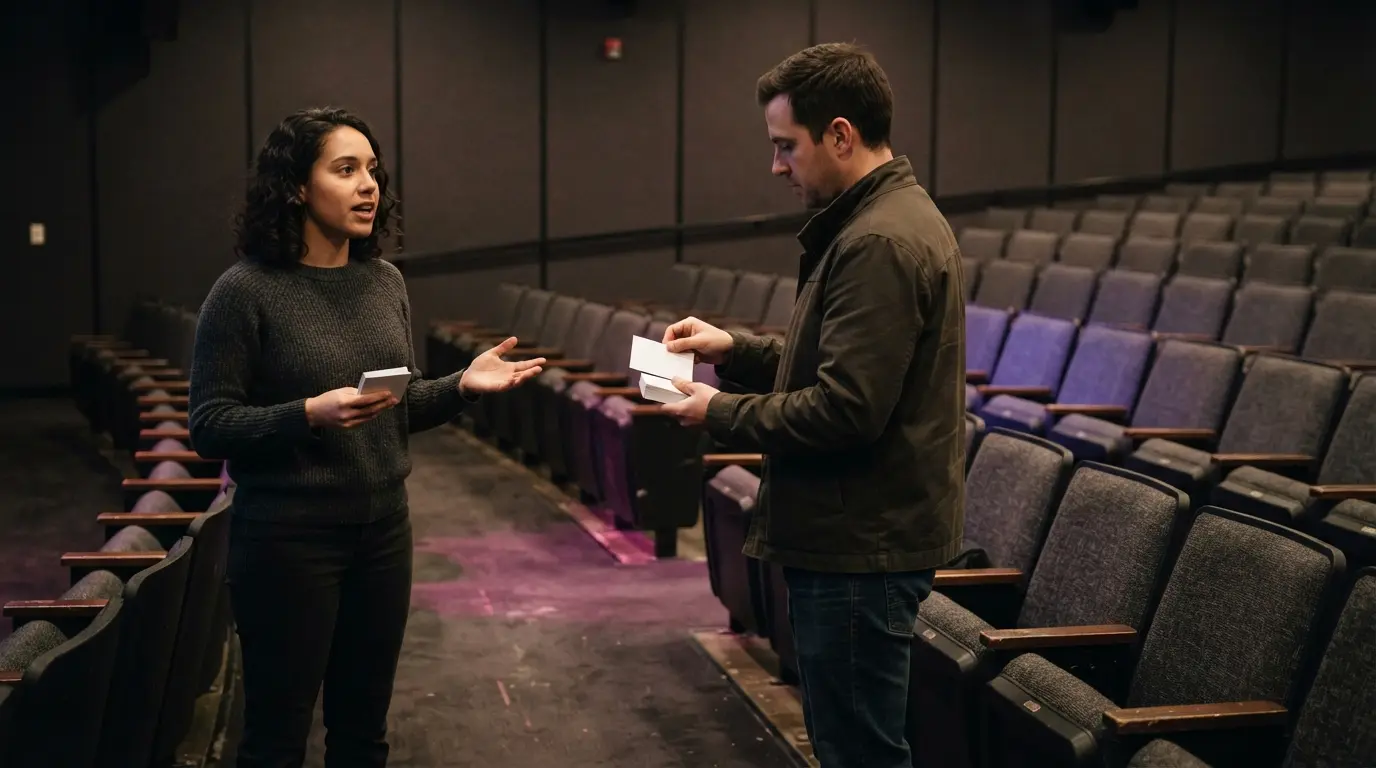
Choose six questions from this guide and record one answer to each. On the first pass, focus only on getting the five-part sequence in the right order. On the second, cut background that does not affect your decision and add one missing safeguard or communication step. On the third, ask a friend to change a constraint halfway through your answer.
Listen for vague verbs such as "handle", "communicate", or "work with". Replace them with an observable action. Instead of "I would communicate with the team", say who you would contact, what you would tell them, and when you would update them. Also remove claims such as "I always stay calm" unless the next sentence proves what you do.
Hiintly can support this kind of live practice by transcribing the question and surfacing resume-personalized suggestions in a private overlay. Its free 10-minute session becomes available again every 15 minutes, which is enough to rehearse a small set of questions, review what felt vague, and try them again without turning the answers into scripts.
Finish by creating a one-page bank of decisions, not polished speeches. Keep a conflict example, a deadline choice, a mistake, a customer issue, and a change you handled. Those examples can support behavioral questions, while the reasoning behind them helps you answer new situational interview questions honestly. The goal is to sound prepared because you know how you think, not because you memorized somebody else's wording.
Frequently Asked Questions
- What are situational interview questions?
- They are hypothetical workplace scenarios that ask what you would do. Interviewers use them to assess judgment, priorities, communication, problem-solving, and awareness of risk.
- How should I answer situational interview questions?
- Clarify the goal, identify the main trade-off, explain your actions in order, say who you would involve, and describe how you would check the outcome.
- Can I use the STAR method for a hypothetical question?
- Yes, but adapt the result. Explain the outcome you would aim for and how you would measure it instead of inventing a result that has not happened.
- How long should a situational answer be?
- A first response of about 60 to 90 seconds is usually enough to show your reasoning while leaving room for follow-up questions.
- What if I have never faced the situation before?
- State a reasonable assumption, explain a safe step-by-step response, and use a related example if you have one. Do not pretend that a hypothetical event really happened.
- Should I ask clarifying questions first?
- Ask one when the missing fact would materially change your decision. Otherwise, state your assumption briefly and continue with a clear answer.