aa.png)
Second round interview questions ask you to connect your experience to the work this particular team needs done. Prepare by reviewing what you learned in the first conversation, choosing evidence for the remaining questions about your fit, and practicing the follow-ups behind each answer. You can reuse a strong example, but bring more useful detail and be ready to explain your decisions.
What changes in a second interview?
A second interview gives the employer another opportunity to examine your fit, and gives you more information to decide whether you want the job. The format varies: you might meet your future manager, potential teammates, or someone assessing a particular skill. Ask the recruiter who you'll meet, how long to allow, and whether there's a task or presentation.
Robert Walters' second-interview preparation guide describes a shift toward detailed questions about problem-solving, working relationships, and role knowledge. Treat that as preparation guidance, not a promise about your employer's process.
Your new interviewer may not have heard your earlier answers. Give enough context for a fresh listener, then connect the example to what you already know about the vacancy. “The recruiter mentioned difficult customer handoffs, so I'll use an example that shows how I handled one” is more useful than assuming everyone remembers your application.
An invitation means the conversation is continuing. It doesn't establish how many candidates remain or whether this is the final stage. Prepare for the assessment described in your invitation rather than reading a likely offer into the round number.
How do you turn first-round notes into better answers?
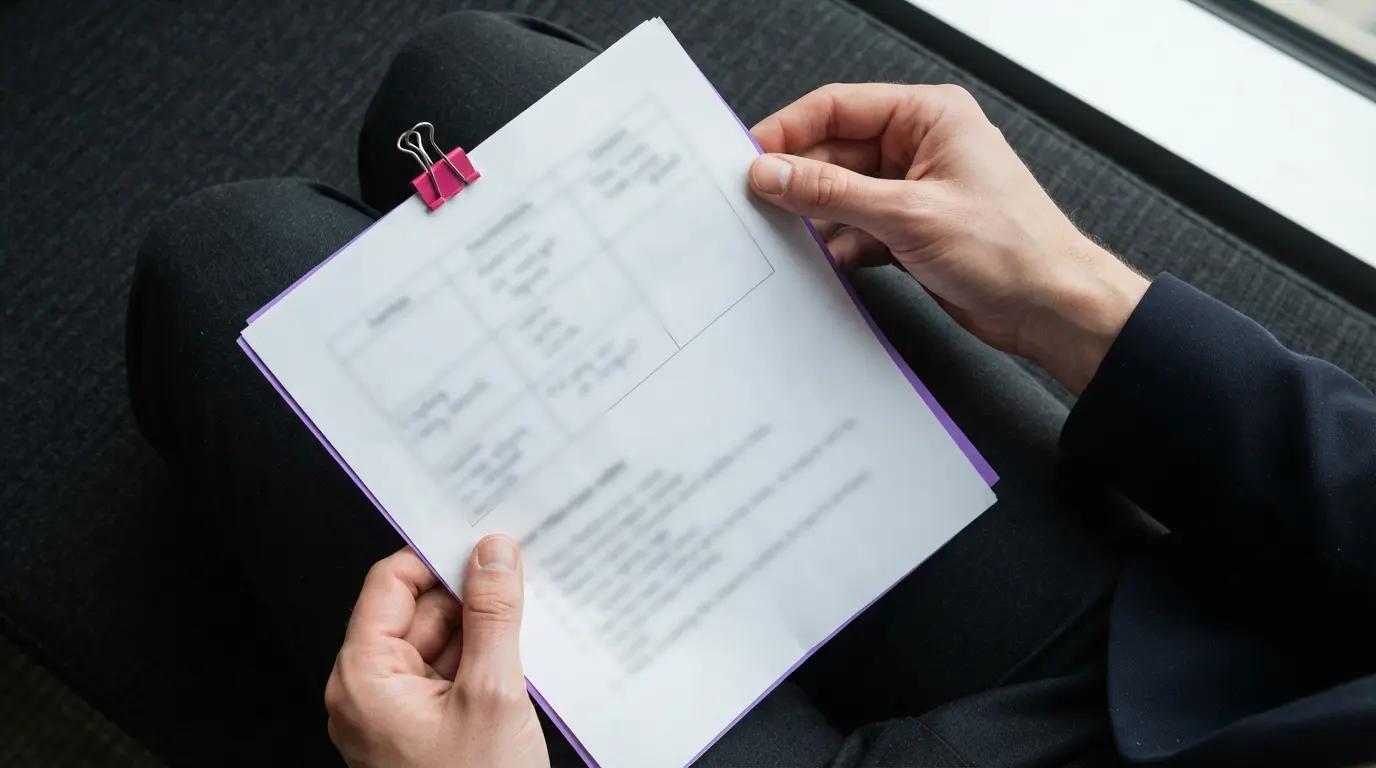
Build a one-page evidence sheet before rehearsing. Divide it into three columns: what you heard, what you can demonstrate, and what you still need to ask. This helps you spend your preparation time on the actual job instead of collecting unrelated interview questions.
For example, suppose the recruiter said the team is missing delivery dates. Your evidence might be a project where you reduced scope after identifying a dependency. Your unanswered question is whether the current delays come from changing priorities, unclear ownership, or technical constraints. Keep those possibilities separate until the interviewer gives you more information.
| First-round clue | Evidence to prepare | Question still open |
|---|---|---|
| Work crosses several teams | A handoff you clarified and the result | Who decides when team priorities conflict? |
| The role includes unfamiliar software | A real example of learning a tool | Which tasks require independence immediately? |
| A previous answer sounded vague | Your specific decision and contribution | Would a more detailed example help? |
You can make this sheet on paper, using the job description and your own notes side by side. Circle assumptions so they don't quietly become facts in your answers. If you bring a work sample, remove confidential information and confirm that you're allowed to share it.
Choose evidence for a successful delivery, a difficult working relationship, and something you changed after feedback. These examples can support several questions without becoming identical answers. Our guide to building flexible behavioral answers explains how to organize the underlying stories; your job here is to connect them to the second conversation.
Which second round interview questions should you practice?
The eight examples below are fictional practice answers, not scripts or claims about a real candidate. Replace their situations with events you can explain honestly. For each question, practice the first response and the follow-up, because the extra detail is where a general claim becomes credible.
1. What can you contribute to the problem we discussed?
Name the problem as you understood it, offer relevant evidence, and leave room to correct your understanding. Avoid promising results before you know the team's constraints.
“You mentioned that customer issues sometimes move between teams without a clear owner. In my last role, I reviewed unresolved cases with support and engineering, then introduced a handoff note naming the next action and owner. That made the outstanding work easier to track. I'd first want to see where your handoffs break down before suggesting a similar change.”
A useful follow-up is, “How did you know it helped?” Prepare the evidence you actually have: fewer repeat escalations, clearer ownership in the case log, or feedback from the people doing the work. If you didn't measure a percentage, don't invent one.
2. Can you explain your contribution to that project in more detail?
This question may revisit a story from round one. Separate what the team achieved from what you personally decided or delivered.
“The team launched the reporting feature. My responsibility was checking that the definitions matched what customers meant by an active account. I found that two reports counted paused accounts differently, brought the owners together, and documented the agreed rule before release. Another engineer built the pipeline; I owned the validation and sign-off.”
Expect, “What would have happened without your intervention?” Explain the likely consequence cautiously and distinguish it from an outcome you observed. You can say the discrepancy would have remained in the specification without claiming you single-handedly saved the launch.
3. How would you approach your first month here?
Show how you would learn, choose a useful contribution, and check your work. A first-month answer should acknowledge that you don't yet have access to internal information.
“I'd start by understanding the team's priorities and watching how work reaches the customer. I'd ask you and the people doing the handoffs where delays occur, then agree on one small improvement I could own. Before expanding it, I'd review the result with the team and check that it hadn't created extra work elsewhere.”
The follow-up might be, “What if we need someone productive immediately?” Explain which familiar tasks you could take on while learning the unfamiliar parts. If asked for a 30-60-90-day plan, frame the milestones as hypotheses to agree with the manager, not commitments made without evidence.
4. Tell me about a disagreement over how to do the work.
Choose a disagreement with a real decision behind it. Explain the other person's concern fairly, then show how you reached or supported a decision.
“A colleague wanted to release the full workflow, while I wanted to start with a smaller pilot. Their concern was having to support two versions. I compared the support burden with the risk of changing every customer's process at once. We agreed on a limited pilot with a clear end date and a shared review of the issues it found.”
Practice answering, “What would you have done if they still disagreed?” Describe the decision owner, the evidence you would provide, and how you would support the final choice. Being easy to work with doesn't require claiming that you always get your way.
5. What did you change after receiving difficult feedback?
Give the feedback, your response, and a visible change in how you worked. Avoid a weakness that conveniently turns into self-praise.
“My manager said my project updates buried the decision she needed to make. I had included every detail because I thought that was helpful. I started putting the decision, options, and deadline at the top, with background underneath. In our next check-ins I asked whether she could act on the update without another explanation.”
A likely follow-up is, “Do you still struggle with it?” Describe the habit you now use and where you still need to pay attention. An ongoing improvement can be credible without claiming the weakness has disappeared.
6. What working environment helps you do your best work?
Translate preferences into observable working arrangements. This gives both sides something concrete to discuss about management style and collaboration.
“I work well when the outcome and decision owner are clear, with room to choose how I get there. Early in an unfamiliar project, I prefer shorter check-ins so I can test my understanding. Once the direction is settled, I usually need fewer. If priorities change, a quick explanation of the trade-off helps me adjust.”
Prepare for, “What if your manager is rarely available?” Explain how you document assumptions, group questions, and identify decisions you can't safely make alone. Don't promise to thrive in every environment if an arrangement would make the job a poor fit.
7. Why are you still interested after the first conversation?
Add something you learned about the real work. Repeating a polished company mission statement misses the chance to show that you listened.
“The first conversation clarified that this role stays involved after a customer signs, especially when implementation gets complicated. That's the part of my current work I most want to develop. I enjoy turning a vague concern into an agreed next step, and I'd like to understand how much ownership this person has across implementation.”
If asked about career goals, connect the skill you want to develop with the work available. You don't need to invent a five-year title or promise to stay forever. You do need a believable reason this role is a sensible next step.
8. Is there anything from the first interview you'd like to clarify?
Use this opening to correct a fact or strengthen one incomplete answer. Keep the clarification proportionate; don't turn it into a long review of everything you wish you'd said.
“I wanted to clarify my answer about the migration. I described the team's overall work, but didn't explain my part well. I owned the test plan and the rollback criteria; the infrastructure team handled deployment. The decision I can explain most usefully is why we delayed one stage after testing.”
If they ask why the earlier answer differed, acknowledge the issue directly. “I compressed the explanation too much” is appropriate when that's what happened. Correcting an inaccurate statement matters more than trying to make both versions sound consistent.
How should you adapt to a different interviewer?
Keep the facts stable while choosing the detail that helps each person assess your work. A manager may ask how you chose priorities, while a teammate may want to know how you handle reviews and handoffs. A senior leader might ask how your decision affected the customer or business objective.
You can check the desired depth before a long explanation: “Would it be more useful to explain the implementation or the decision behind it?” For a technical assessment, follow the stated task and explain assumptions before proceeding. Don't force a prepared behavioral story into a problem-solving exercise.
If several people attend together, answer the questioner first and include the other listeners naturally. For the mechanics of sharing attention across the room, use our panel interview preparation guide. The round-two evidence sheet still applies whether you're speaking to one person or several.
What should you ask before the conversation ends?
Choose questions that resolve something you still don't understand. If the first interviewer described a team priority, ask how this role contributes to it. If two people describe the responsibilities differently, ask for clarification without treating the difference as a confrontation.
You might ask, “Which decision would you want this person to own without checking with you?” or “What has made the handoff between these teams difficult?” These questions invite concrete examples you can use to judge the role and working relationships.
Leave time to ask whether any part of your experience needs further explanation, then confirm the next step and expected timing. Our guide to questions that reveal what a job is actually like can help you choose useful follow-ups.
How can you rehearse in 30 minutes?

Treat this as a suggested practice session, not a requirement for every interview. Ask a friend to play the interviewer in a quiet room, with your evidence sheet put away during each answer.
- Spend five minutes checking the invitation, interviewer roles, and first-round notes.
- Spend ten minutes answering three questions aloud, with one follow-up after each.
- Spend ten minutes repeating the answer that lacked evidence, then practicing your clarification and your own questions.
- Use the final five minutes to confirm travel or call arrangements and set out any permitted materials.
If you're testing live assistance during a permitted mock conversation, Hiintly can transcribe the exchange and surface resume-personalized answer suggestions. Its free 10-minute sessions are available again after a five-minute cooldown. Check every suggestion against your real experience, then practice answering without reading it so you can judge what you actually remember.
Before a real interview, confirm the employer's rules for any assistance you plan to use. Test the video and audio setup if the conversation is remote. For an in-person meeting, check the location, arrival instructions, and whether you need to bring an approved sample.
Afterward, write down what you learned while it's fresh. A brief thank-you can mention a specific discussion and your continuing interest; send any material you agreed to provide. If the stated response date passes, follow up with the recruiter. Keep your notes for another round so each conversation builds on the last.
Frequently Asked Questions
- Does a second interview mean I will get an offer?
- No. It means the employer wants to continue assessing the match. Ask what this stage covers and what steps remain instead of assuming the invitation is a final decision.
- Can I reuse an example from my first interview?
- Yes, when it answers the question. Give enough context for a new interviewer, then add useful detail about your own decisions, contribution, or results. Keep the underlying facts consistent.
- How long should my second-interview answers be?
- Give a direct opening answer and enough evidence to make it credible, then allow the interviewer to probe. Practice a concise version first; expand when the question or interviewer calls for detail.
- What if I gave a weak answer in the first interview?
- Prepare one specific clarification with evidence. Raise it when the relevant subject comes up or when invited to add something. Correct factual errors directly and avoid reopening every earlier answer.
- Should I bring a 30-60-90-day plan?
- Bring one if requested. Otherwise, prepare a short explanation of how you would learn, contribute, and review progress. Label assumptions and avoid promising outcomes before you understand the role.
- What if I have already asked all my questions?
- Use what you learned to ask a deeper follow-up about an unresolved responsibility, decision, or team challenge. You can also ask what remains in the hiring process and whether any part of your background needs clarification.